
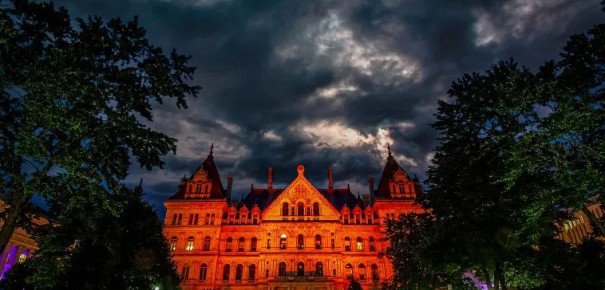
New York State Capitol Hauntings Tour
Approved for 1 LU/HSW
Capitol Hauntings tours, explore the legends, folklore, and tales of unexplained occurrences connected to the historic State Capitol, including mysteries behind the Capitol's most notorious carvings and the deadly fire of 1911.
All with a focus on architecture, brave visitors will make their way through the Capitol to the exact spot where a night watchman died in a fire before exploring the legend of the "Secret Demon" near the Great Western Staircase. Discover which two Presidents visited the Capitol after they died and learn about the state Assembly Chamber's hidden murals and the tormented artist who created them.
Once they're gone... they're gone forever. Haunted tour tickets are frightfully limited and available on a first-come, first-serve basis. Don't become the one left behind!
2026 AIA Tri-State Conference
The 2026 AIA Tri-State Conference returns November 4–6 at the Hyatt Regency Princeton.
Join architects and design professionals from across New York, New Jersey, and Pennsylvania for the 2026 AIA Tri-State Conference, Shaping the Future Now: Progress Rooted in Perspective.
The conference experience begins November 3 with Pre-Conference Intensives, followed by three days of inspiring keynotes, peer-reviewed education sessions, architectural tours, networking, design excellence, an Expo with 45+ exhibitors, and more.
Featured Tours Include: Enhance your conference experience with a selection of immersive architectural tours showcasing the design, history, and innovation that define the Princeton region:
BAPS Swaminarayan Akshardham campus: Explore extraordinary craftsmanship.
Princeton University: Discover carbon-neutral energy initiatives.
Regional Landmarks & History: Tours highlighting Princeton's iconic landmarks, Trenton's evolving urban landscape, the historic Witherspoon-Jackson District and its Black churches, and the thoughtfully designed Dillon Gym.
Accommodations & Hotel Info
Get Ready for Princeton Located in the scenic Carnegie Center just minutes from downtown Princeton, the Hyatt Regency Princeton offers an exceptional setting with a striking atrium, over 30,000 square feet of meeting space, on-site dining, and a fitness center.
Discounted Rate: Rooms start at $179 per night.
Room Block Deadline: Book through October 12, 2026.
Princeton is centrally located in New Jersey
By Train: Amtrak and NJ TRANSIT (Princeton Junction)
By Bus: Greyhound, NJ Transit Bus, Coach USA, Megabus
By Car: NJ Turnpike, I-95, US Route 1, Route 206
Parking: Metered street parking and downtown garages (map and details available)
By Air: Newark Liberty International (39 miles), Philadelphia International (52 miles), Trenton-Mercer Regional Airport, Princeton Airport
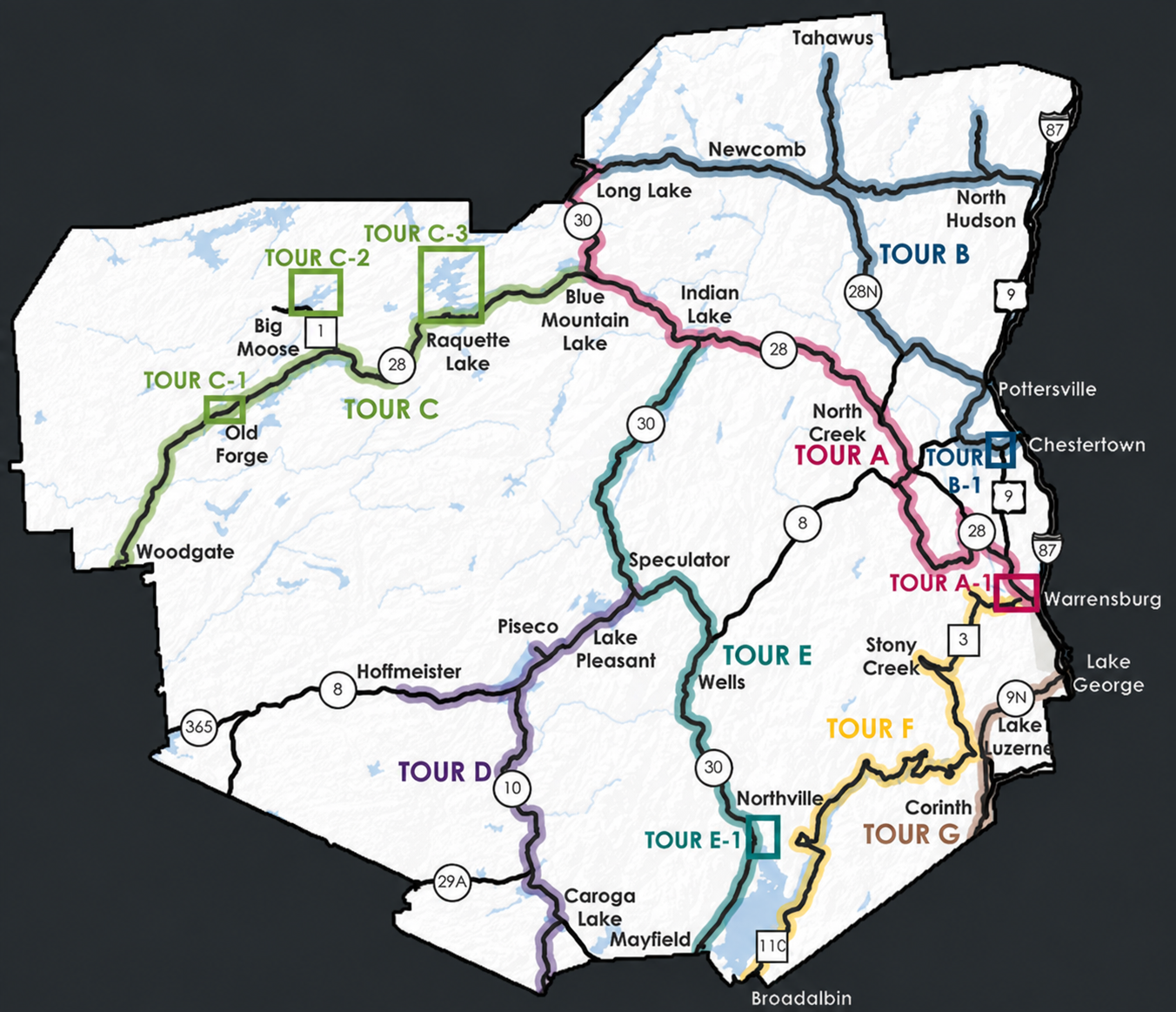
Janet Null presentation on Adirondack Architecture
Save the Date
Join us for light refreshments and social hour followed by a presentation on Adirondack Architecture by Janet Null, author of Adirondack Architecture Guide (Home | Adirondack Architecture Guide)
This will be held at the historic Van Ostrande–Radliff House, Albany’s oldest building at 48 Hudson Ave! This newly renovated space is the home to the brand new headquarters of the Historic Albany Foundation.
Registration details will be forthcoming.
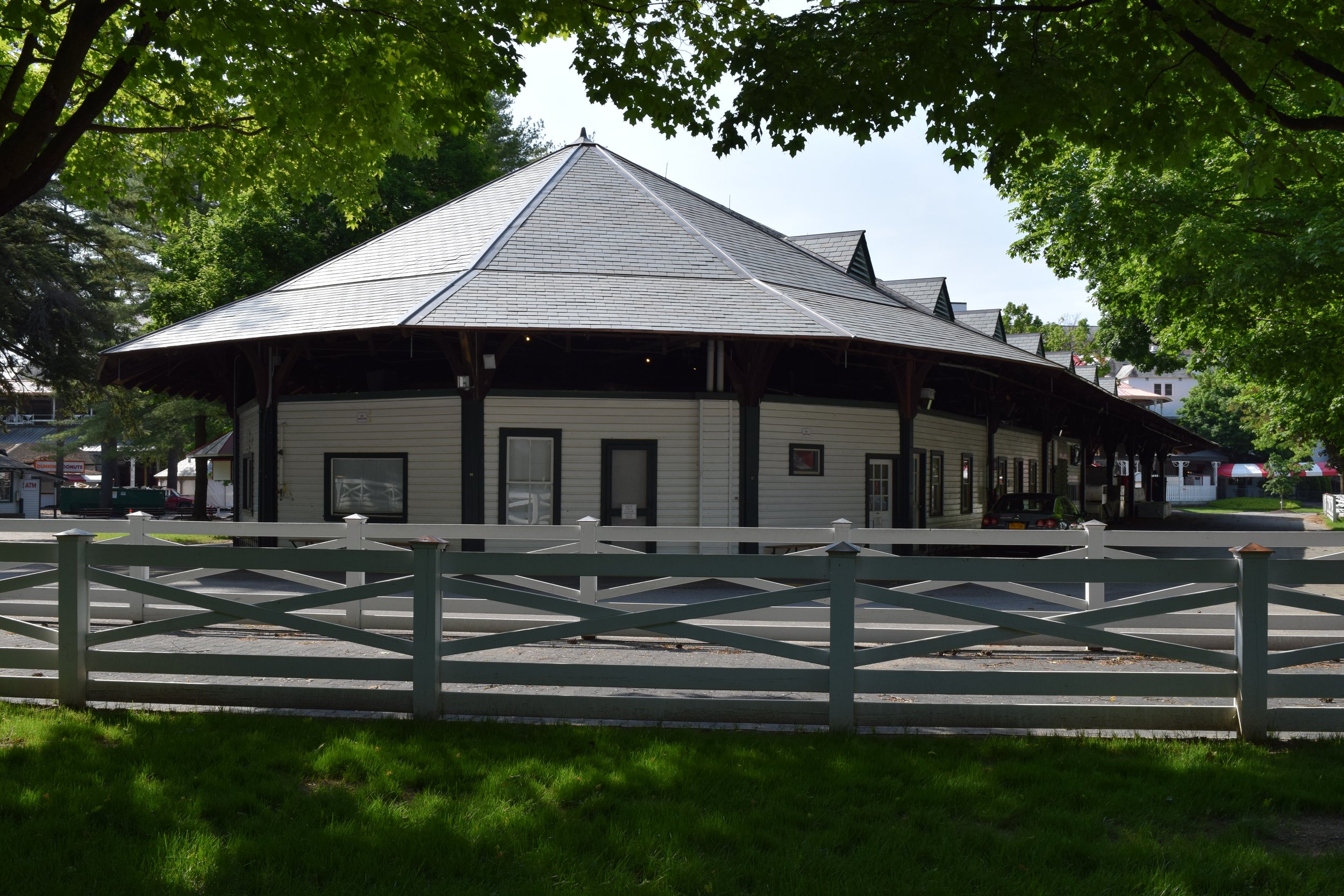
Tour of Saratoga Race Course (POSTPONED)
Submitted for 2 LU
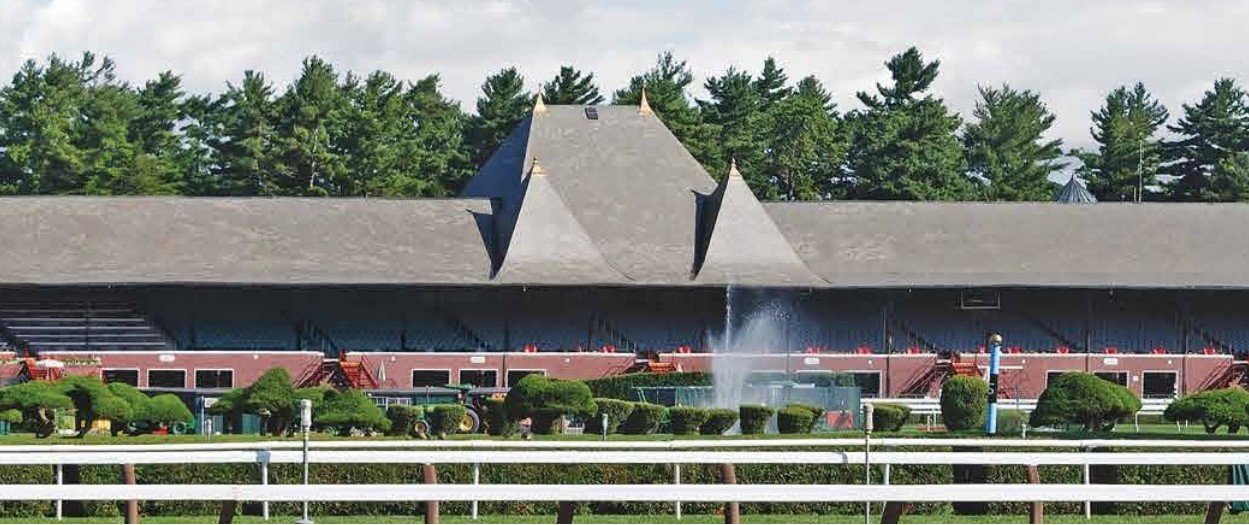
AIAENY and the Saratoga Springs Preservation Foundation is thrilled to offer an exclusive behind-the-scenes walking tour of the historic Saratoga Race Course Thursday, September 10 at 9:00 a.m. Join the Foundation’s Executive Director, Samantha Bosshart, for this rare opportunity to explore one of the most iconic sporting venues in the United States. The special walking tour will take you through both the public and lesser-known sides of the Saratoga Race Course. Highlights include iconic locations such as the Grandstand, Clubhouse, the Oklahoma Training Track as well as areas not usually open to the public - the original 1847 race track and Horse Haven.
The Saratoga Race Course is the oldest organized sports venue in the country with a rich history which continues to be written today. The Foundation plays a vital role in its preservation by providing the only required advisory opinion for proposed improvements to the property, ensuring that its historic charm is maintained while accommodating the needs of modern-day racing.
Samantha will discuss the Foundation’s advisory role in reviewing capital improvements made by the New York Racing Association (NYRA). She will be joined by Matt Hurff of Frost Hurff Architects. Matt is responsible for many of the improvements at the track, including rehabilitation and new construction projects, including the 1863 Club and Post Bar.
The tour is approximately two hours. Tours begin at the Whitney Viewing Stand at the Oklahoma Training Track. You will enter the gate off of East Avenue and park near the Whitney Viewing Stand. There is uneven terrain so please wear proper walking shoe
Cost to attend is $25
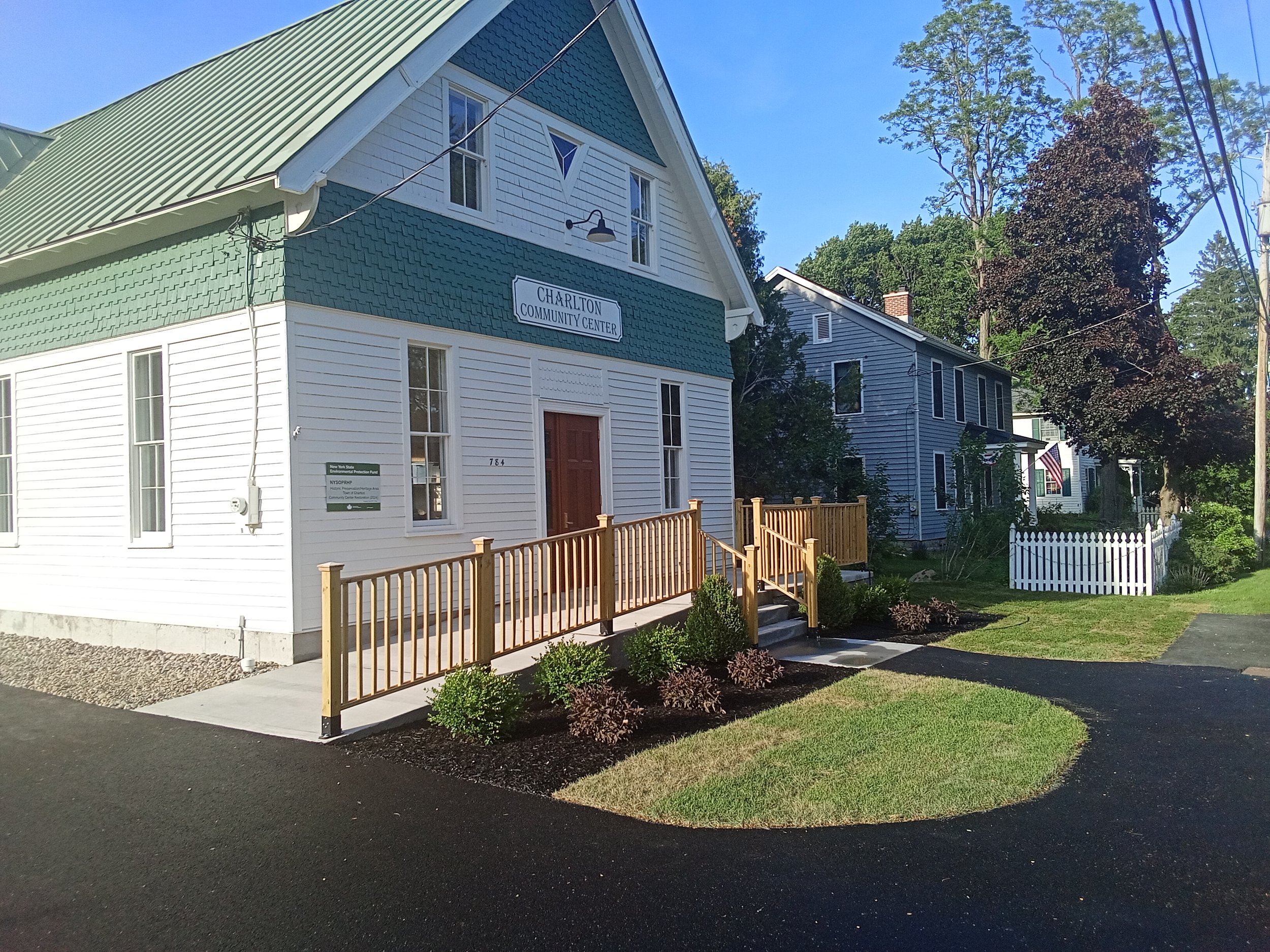
Tour - Charlton Community Center: Hazardous Materials, Structural Repair, and Code Compliance
TOUR POSTPONED: NEW DATE AVAILABLE SOON
Submitted for 1 LU/HSW
This complimentary one-hour guided tour examines the $1.15 million rehabilitation of the Charlton Community Center, a 19th-century civic building and contributing resource in the National Register–listed Charlton Historic District. Led by the project architect and the Town's Zoning Administrator, the tour walks participants through a full-scale rehabilitation delivered under the Secretary of the Interior's Standards and the compliance requirements of state and federal preservation funding.
Participants will trace the project sequence in the completed building: hazardous materials abatement of asbestos-containing materials and lead-based paint; replacement of failed foundations and installation of a new slab and drainage system; restoration of historic wood windows and ceilings; and complete envelope and MEP modernization. Discussion will center on the recurring conflict in preservation work: bringing an assembly-occupancy building up to current life safety, accessibility, and energy code while retaining the historic fabric that made it eligible for public funding in the first place. Presenters will address both the design resolutions and the municipal review, permitting, and grant-compliance framework that shaped them.
Learning Objectives
Identify the hazardous materials protocols required when rehabilitating a pre-1900 civic building and describe how asbestos and lead-based paint abatement is sequenced ahead of restoration work to protect construction personnel and future building occupants.
Explain how foundation replacement, new slab construction, and site drainage improvements address structural instability and moisture-driven deterioration and assess the resulting effects on material durability and indoor environmental quality.
Describe strategies for achieving accessible routes and code-compliant egress, fire protection, and mechanical ventilation in a historic assembly occupancy, and evaluate how the Existing Building Code's historic building provisions were applied to reconcile life safety requirements with the Secretary of the Interior's Standards.
Evaluate building envelope interventions (roofing, insulation, siding, and historic wood window restoration) for their combined effect on thermal performance, moisture management, and the long-term preservation of historic fabric.

AIAENY @ Tri-City Valley Cats
Join AIA Eastern New York for a Summer Night at the Ballpark!
Spend a fun-filled summer evening with AIA Eastern New York as we cheer on our hometown Tri-City ValleyCats! Bring your colleagues, friends, and family for a relaxed night of networking, great food, and America's favorite pastime.
Enjoy a buffet featuring classic ballpark favorites, connect with fellow AIA members, and cap off the evening with an exciting game and spectacular post-game fireworks.
Don't miss this opportunity to make new connections, catch up with industry peers, and enjoy a memorable summer night at the ballpark. We can't wait to see you there!
5:30PM -6:30PM Buffett
6:30PM - 9:00PM Game
Fireworks begin at the conclusion of the game.
Adults - $30
Children Under 12 - $25

Virtual tour: Alice Dodge Wallace '38 Center for the Performing Arts Tour
Approved for 1 LU/HSW - Note if you took the live tour in 2025 you are more than welcome to attend this, but you will not be eligible for CE.
Back by popular demand - join us for a virtual edition of our Alice Dodge Wallace ‘38 Center for the Performing Arts at Emma Willard., now an AIA New York State Design Award winning project!
Founded in 1814, The Emma Willard School in Troy, New York is a national leader in education for young women. Its landmark campus balances Jacobean Revival and contemporary architecture within a historic landscape designed in part by the Olmsted Brothers. Annum’s Alice Dodge Wallace ’38 Center for the Performing Arts transforms the historic chapel (originally built as a gymnasium), giving it a third life as a 495 seat theater and community gathering space, and connecting it to a new below-grade wing with orchestra, theater and dance spaces, as well as a habitable green roof.
Via Zoom, participants will gain a comprehensive understanding of the project's evolution, from its historic origins and pre-renovation conditions to construction challenges and design solutions, culminating in a visual tour of the completed performance spaces through photographs and video.
Join us for a complimentary VIRTUAL tour of this facility during which we will discuss:
•Annum’s design process, and the balance of architectural heritage with contemporary design
•Designing for the performing arts: planning, technology and acoustics
•Landscape design on a historic campus, and its influence on the arts wing roof
•Structural challenges and solutions in the adaptive reuse of the historic chapel
•Preservation methodologies and techniques for the historic chapel exterior
•Challenges and solutions for sustainability in MEPFP systems upgrade
•Designing for accessibility within a heritage structure

Design & Honor Awards Celebration
The AIA Eastern NY Design Awards is a local awards program honoring our members, highlighting the excellence of their creations and bestowing on them the much deserved recognition for their remarkable contributions to the built environment.
Join us on June 23, 2026 at Arts Center of the Capital Region in Troy on June 23, 2026.
Attendees will also have an opportunity to take part in a complimentary tour of the newly renovated Troy Savings Bank Music Hall prior to the event.

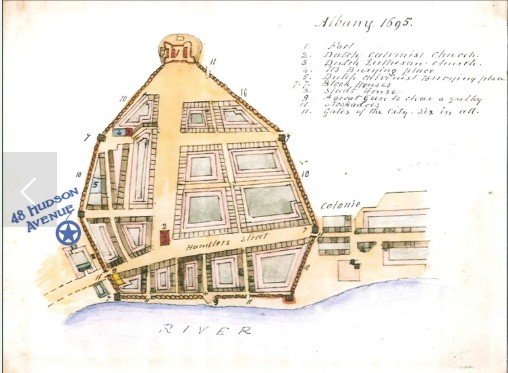
Tour: 48 Hudson Avenue: The Van Ostrande-Radliff House
Join us for an exclusive, complimentary tour of the newly renovated, oldest building in Albany. 48 Hudson Avenue has had a variety of different uses and undergone many changes; growing wider, taller, and deeper with three major additions and alterations between 1790 and 1892, and two facelifts in the 20th century. Ironically, every time the building was significantly altered, the owner stripped the building back down to the Dutch “bones” and today, the story most clearly told is by the building itself in physical evidence that is its Dutch origin. Now, Albany’s oldest building is going to become the new headquarters for Historic Albany Foundation’s operations. he historic house will become a classroom space that will host HAF’s workshops, lectures, and other programs, as well as be open to the public to rent. It will also house HAF’s research library where anyone can come research Albany’s history using grantor, grantee indexes, city directories, and other published books on Albany history.
This tour is complimentary to attend, but space is limited.
About the tour:
This tour has been approved for 1 LU/HSW
This one-hour architectural tour of the Van Ostrande-Radliff House, the oldest surviving building in Albany, invites participants into a rare and tangible connection with the city’s early history. As one of the few remaining examples of early Dutch urban architecture in the Hudson Valley, the house offers not only a window into 18th-century life, but also a compelling case study in how historic buildings endure, evolve, and can be responsibly adapted for continued use.
Led by preservation professionals from the Historic Albany Foundation, the tour will explore the building’s original materials and construction methods alongside the layers of change that have accumulated over nearly three centuries. Participants will encounter the physical evidence that tell the story of both craftsmanship and survival, and that now inform careful decisions about stabilization, repair, and restoration.
At the same time, the course will examine the complex challenge of making a pre-code structure safe and accessible for the public today. Discussions will include strategies for addressing structural integrity, fire safety, and means of egress; integrating accessible routes and vertical circulation; and upgrading building systems, all while preserving the character and authenticity that give the building its meaning. The tour will highlight how design professionals thoughtfully balance regulatory requirements, occupant safety, and long-term performance with a deep respect for historic fabric.
By acknowledging contemporary considerations within the lived history of the building, this tour will underscore the architect’s role as both problem-solver and steward, ensuring that places of cultural significance remain not only preserved, but safe, inclusive, and alive for future generations.
Learning Objectives
1. Reflect on and share how encountering a building that has stood for nearly three centuries can evoke a sense of continuity, craftsmanship, and human connection across time.
2. Identify how historic construction methods and materials in the Van Ostrande-Radliff House influence structural behavior, fire resistance, and overall building performance.
3. Evaluate how the building’s evolution over time, including additions and alterations, affects current life safety conditions such as means of egress, hazard exposure, and occupancy considerations.
4. Explain how building codes, life safety requirements, and preservation standards are applied and balanced in the rehabilitation of a pre-code historic building.
5. Assess how preservation and adaptive reuse contribute to occupant health, safety, and welfare by extending the life of existing buildings, conserving resources, and maintaining meaningful connections to place.
Architecture Week 2026
Architecture Week celebrates the profession of architecture and invites everyone—especially K-12 students—to explore architecture and design. We all play key roles in educating and inspiring the next generation of architects. Let's build the pipeline together.
Thank you to our 2026 Architecture Week sponsors, The AIA College of Fellows and Committee on Architecture for Education.
AIA Brooklyn ARE Study Group - PjM
AIA Brooklyn’s ARE Study Sessions are complimentary and open to members of AIA Eastern NY!
Get ready to dive deep into the world of architecture and engineering with virtual AIA BKEP ARE Study Sessions - knowledge awaits
Sign up to share your study notes & run discussions on the Division subject of your choice/exam focus, to get various perspectives on the exam material as you study for your exams!
This session AIA Contracts. It will be the second of two sessions on this.
AIA Brooklyn ARE Study Group - PcM
AIA Brooklyn’s ARE Study Sessions are complimentary and open to members of AIA Eastern NY!
Get ready to dive deep into the world of architecture and engineering with virtual AIA BKEP ARE Study Sessions - knowledge awaits
Sign up to share your study notes & run discussions on the Division subject of your choice/exam focus, to get various perspectives on the exam material as you study for your exams!
This session AIA Contracts. It will be the first of two sessions on this.
AIA Eastern NY Annual Meeting
2025 Annual Meeting and Election of 2026 Officers and Directors.

Tour of NYS Capitol
Approved for 1 LU/HSW
The New York State Capitol has been the seat of the New York State government for over a century. This magnificent building was completed in 1899 and took over 32 years to complete.
The Capitol was designed by four different architects- Thomas Fuller, Leopold Eidlitz, Henry Hobson Richardson, and Isaac Perry. Many different architectural styles can be seen throughout this building including Italian Renaissance, Gothic, Moorish, and French Renaissance.
The tour will visit the Senate and Assembly Staircases, the Great Western Staircase, the Senate and Assembly Chamber Galleries, as well as the Governor’s public Reception Room, to name most of the tour destinations. We will learn about how much the Capitol cost to construct, why it took so long to build, and of course the design and architecture that makes it the revered National Historic Landmark it is today.
Learning Objectives:
Discuss the history and architectural design of the New York State Capitol, focusing on recent restoration efforts;
Evaluate the architectural challenges involved in restoring the Capitol while also accommodating the needs of modern New York State government;
Breakdown the techniques and special fabrication processes used in recent restoration projects including: stone carving, hand-made & hand-painted art glass, decorative terra cotta roofing, monumental skylights, restoration stone cleaning, and ornamental interior metalwork;
Illustrate the procurement process of consultant engineers and architects
Alice Dodge Wallace '38 Center for the Performing Arts Tour
Approved for 1.5 LU/HSW
Founded in 1814, The Emma Willard School in Troy, New York is a national leader in education for young women. Its landmark campus balances Jacobean Revival and contemporary architecture within a historic landscape designed in part by the Olmsted Brothers. Annum’s Alice Dodge Wallace ’38 Center for the Performing Arts transforms the historic chapel (originally built as a gymnasium), giving it a third life as a 495 seat theater and community gathering space, and connecting it to a new below-grade wing with orchestra, theater and dance spaces, as well as a habitable green roof.
Join us for a complimentary tour of this facility during which we will discuss:
•Annum’s design process, and the balance of architectural heritage with contemporary design
•Designing for the performing arts: planning, technology and acoustics
•Landscape design on a historic campus, and its influence on the arts wing roof
•Structural challenges and solutions in the adaptive reuse of the historic chapel
•Preservation methodologies and techniques for the historic chapel exterior
•Challenges and solutions for sustainability in MEPFP systems upgrade
•Designing for accessibility within a heritage structure

KIPP Tech Valley HS Tour
Over the past few years since the addition of the Albany Community and Troy Prep Schools, KIPP has grown from two to seven schools serving students across the Capital Region. To better support the growing KIPP community, CSArch led a planning study in January 2021 to develop options for a new high school. After a survey to parents in the spring of 2023 revealed an overwhelmingly positive response to the possibility of a space for all “KIPPsters” in grades 9-12, the goal to create KIPP Capital High School became an exciting reality.
Since March 2023, CSArch has led the charge for the design and construction of the brand-new high school building on the site adjacent to the existing KIPP Tech Valley Primary and Middle School. With capacity for up to 800 students, the three-floor, 95,980 SF building will include general classrooms, art and music classrooms, science labs, computer, media and innovation labs, a large gymnasium and fitness center, student support suite, and administrative offices. To maximize flexibility and adaptability, the cafeteria and learning stair will serve as the community-centering focal point of the building, providing support for large or small gatherings, presentations, and school performances.
Upon completion in July 2025, the new high school will offer a safe, engaging, and innovative educational experience for all KIPPsters.
It is next door to the current KIPP Tech Valley Middle School at 400 Northern Boulevard Albany, NY 12210. There is parking in the rear of the building.
Approved for 1 LU/HSW
Registration is limited to 20 participants.
Registration is complimentary for members of AIAENY


Tour Roots Grow Center – Adaptive Reuse and Sustainable Design in Practice
This complimentary tour is only available to attendees of the Design and Honor Awards Reception.
Explore the multi-phase transformation of Capital Roots’ headquarters through an architectural tour of Capital Roots in Troy, NY. Beginning with the vision behind Phase 1, participants will learn how the project embodies Capital Roots’ mission to nourish healthy communities with access to fresh food and green spaces for all.
Phase 1 involved the adaptive reuse of a former manufacturing building at 594 River Street into a vibrant, accessible hub. Emphasis was placed on cost-effective sustainable solutions, including solar power, green roofs, permeable paving, bioretention gardens, and a functional water-harvesting silo that also serves as a striking design feature. The design team maximized natural light, reused original building materials, maintained operable windows and high ceilings, and created an open floor plan to support movement, communication, and a healthy workplace—all while avoiding the need for an elevator through creative accessibility solutions.
Phase 2 expanded on this vision with the construction of a new facility to increase food production capacity. The new building incorporates sustainable materials and systems, including daylighting strategies, a photovoltaic roof, and stormwater management features to protect the Hudson River. With a larger commercial kitchen, indoor market, and community gathering spaces, the center continues to support the organization’s mission and deepen its impact across the Capital Region.
This tour will highlight how adaptive reuse, green technology, and mission-driven design can come together to create healthier, more sustainable communities.
Learning Objectives:
Analyze how adaptive reuse strategies contribute to sustainable design while enhancing public and nature’s health through reduced construction waste, improved indoor air quality, and preservation of historic materials.
Evaluate the impact of integrated green infrastructure—including green roofs, permeable paving, stormwater management, and solar energy—on site performance, energy efficiency, and the environmental health of surrounding communities.
Identify cost-effective design solutions that prioritize occupant well-being, such as maximizing daylight, utilizing natural ventilation, and creating accessible, movement-friendly environments without reliance on complex mechanical systems.
Demonstrate how architecture can support community health and equity by aligning with the mission of organizations like Capital Roots to provide access to fresh food, green space, and inclusive gathering spaces for underserved populations.
Approved for 1 LU/HSW
Designing for Human Centric Lighting
Presented at Hippo's Showcase Home in Voorheesville, this presentation seeks to provide guidance on how to take a human-centric approach to lighting design, and understand the key design considerations including lighting quality, natural light, and personalized controls.
The house is complete with Lutron Ketra, programmed to follow circadian rhythm. Having this CEU in a residential environment should make for an informative (and enjoyable) event.
1 LU
Complimentary Registration: Click here


Doing Business with Dormitory Authority of the State of New York
DASNY leaders and attendees will engage in a series of presentations about upcoming projects, organizational updates, and opportunities to provide professional consulting services. Opening remarks will be given by DASNY President & CEO, Robert Rodriguez.
AIA New York State members are invited to attend at the ACEC New York member rate, using code DASNYAIA at checkout.

University at Albany College of Nanotechnology, Science and Engineering (Former Albany High School) Tour
A long-standing educational landmark in Albany’s midtown, the 129,000 square foot, Neoclassical building originally served as Albany High School from 1913 to 1974. After the high school moved to its current location on Washington Avenue, the building housed Philip Schuyler Elementary School before the University at Albany purchased the property in 2013. During that 100-year period, the building retained most of its original character and charm, including the historic corridors, exterior envelope, entry foyers, stairwells, skylights, and the building’s 1200-seat auditorium.
In 2016, UAlbany announced plans to embark on a multi-phased, comprehensive renovation and adaptive reuse of the former Albany High School. Once complete, the building would house the University’s new College of Nanotechnology, Science, and Engineering (CNSE) to provide state-of-the-art educational, lab, and research facilities for engineering and computer science programs. Led by CSArch as the architect and engineer-of-record, the design focuses on restoring and preserving the most distinguishable features of the original building while creating state-of-the-art spaces for cutting-edge research and academic programming to take place.
The recently completed phase of the project restored the south wing, which encompasses approximately half of the building’s 129,000 square feet. Construction of the $85 million project will now shift to a comparable renovation of the north wing and restoration of the historic auditorium in the sixth and final phase of the project, which is expected to be complete in 2027. Upon completion, the project will achieve LEED Gold certification and expand the size of UAlbany's downtown campus by about 40 percent, while simultaneously serving as a testament to the city's rich history.
We will be touring the completed wing of the building and the wing that is currently under construction. Please be sure wear appropriate attire and provide your own hard hat.
Street parking is recommended as the nearby campus lot requires a UAlbany-issued parking pass.
Submitted for 1 LU/HSW
Registration is limited to 20 participants.
Registration is complimentary for members of AIAAENY